
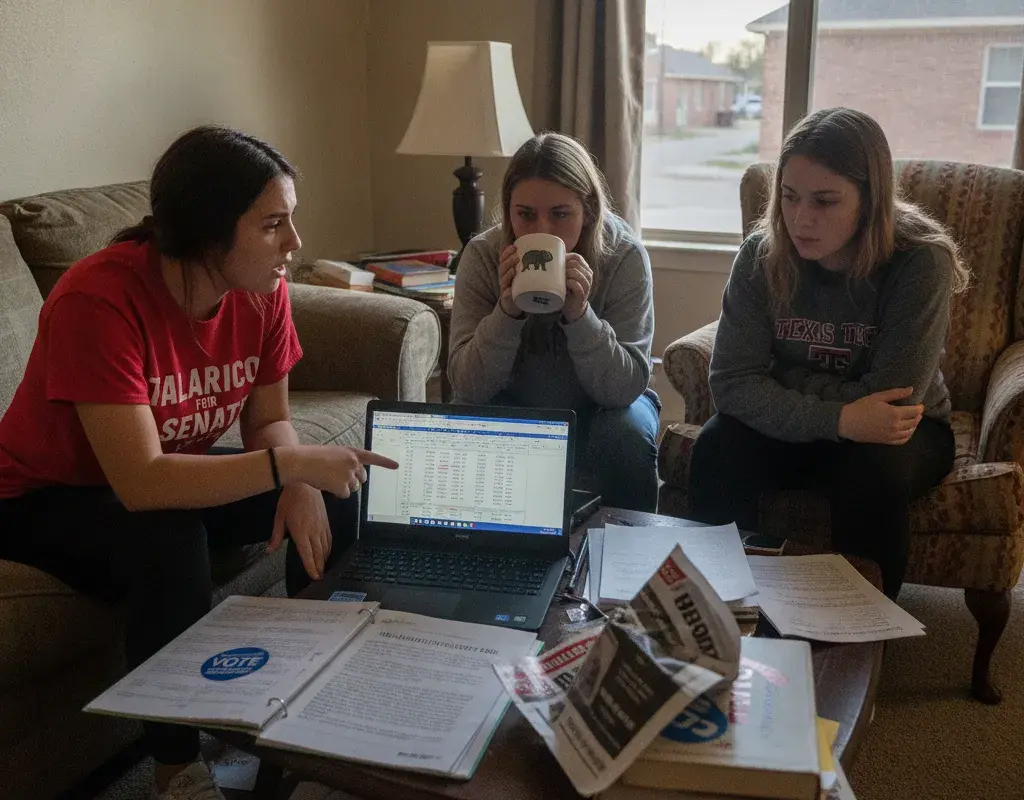
In a cozy off-campus apartment in Lubbock, three Texas Tech University students are discovering that sharing a roof does not necessarily mean sharing a worldview. While they split the bills and balance their coursework together, Isabella, Kate, and Candy find themselves on opposite sides of a Senate race that has become unexpectedly tight. The tension between their personal beliefs mirrors a larger struggle playing out across the state, as Democrat James Talarico attempts to chip away at a Republican stronghold that has remained virtually untouched for decades.
For Isabella, the choice is clear and rooted in her professional aspirations within the oil and gas industry. She argues that Republican policies provide the necessary freedom for energy exploration and pipeline construction without the burden of extreme government regulation. Her perspective stands in stark contrast to those of her roommates, Kate and Candy, both of whom cast their votes for Talarico. Kate, a nineteen year old from Dallas, views her first voting experience as an opportunity to fight for reproductive rights and more compassionate immigration enforcement, prioritizing human contribution over strict deportation policies.
Economic pressures are equally central to the conversation inside the apartment. Candy describes the crushing weight of inflation, noting how the cost of filling her gas tank has nearly doubled during her time in college. For her, these daily financial struggles combined with concerns over public education made Talarico the logical choice. Yet, despite their hopes for change, both Kate and Candy admit they remain skeptical about whether Texas is truly ready to flip blue, acknowledging that their bubble in a college town may differ from the reality of the wider state.
As high profile figures like Donald Trump descend upon Lubbock to energize the base for Republican Ken Paxton, these three young women continue to coexist amidst a sea of political polarization. They have reached an unspoken agreement that friendship outweighs ideology, treating their dinner table discussions as exercises in understanding rather than battlegrounds for conversion. By separating their living situation from their ballots, they serve as a quiet example of how some Texans are attempting to maintain social bonds even as the political divide deepens around them.