
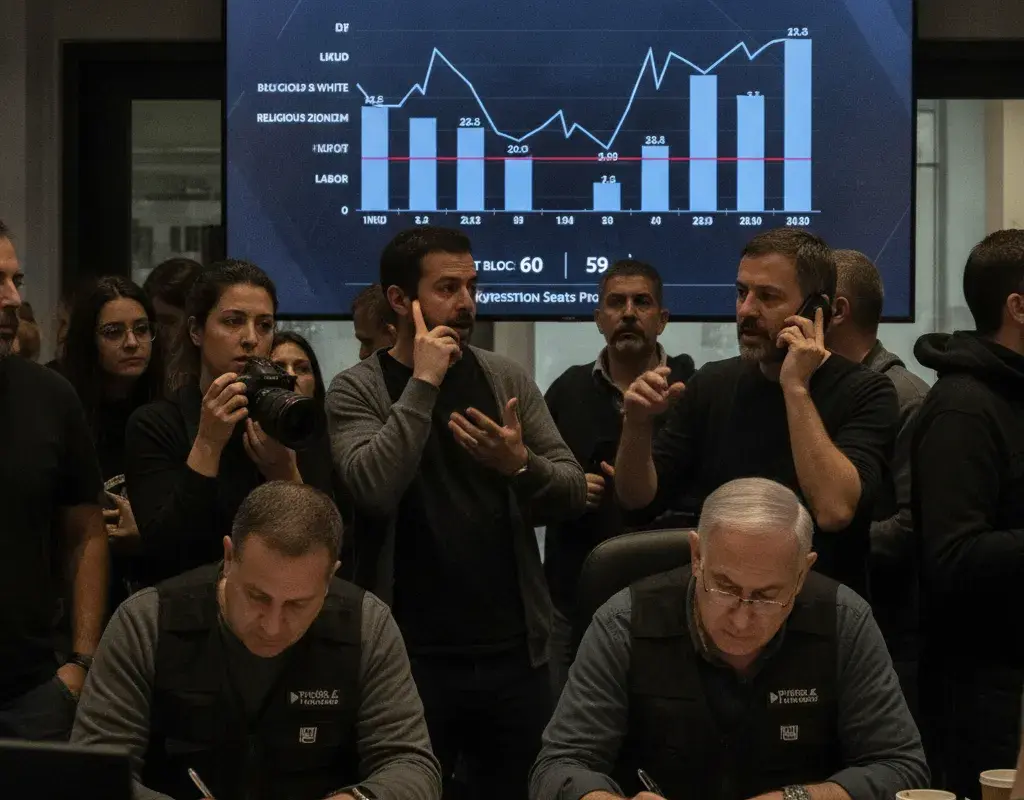
The political future of Israel remains precarious tonight as early returns from the latest general election indicate a razor-thin margin between the country’s primary power blocs. While Prime Minister Benjamin Netanyahu has already claimed that right-wing parties secured a decisive victory among the Zionist electorate, exit polls paint a far more complicated picture. The data suggests that while Netanyahu maintains a slight lead over the opposition alliance led by Gabi Ashkenazi and Benny Gantz, neither camp possesses enough seats to form a governing majority on their own.
In an effort to consolidate his position, Netanyahu has called for the immediate formation of a national right-wing government. However, his path to power appears blocked by a fragmented Knesset where small parties hold significant leverage. This deadlock increases the likelihood of protracted negotiations or even another snap election if no viable coalition can be assembled through compromise.
Adding to the tension is the role of Arab political parties, whose influence could prove pivotal in breaking the stalemate. Despite their potential as kingmakers, Netanyahu has been quick to dismiss any such alignment, describing the prospect of a coalition involving Arab parties as shameful. As officials continue to tally votes throughout the night, the nation remains suspended in uncertainty, waiting to see if a stable government can emerge from the divide.