
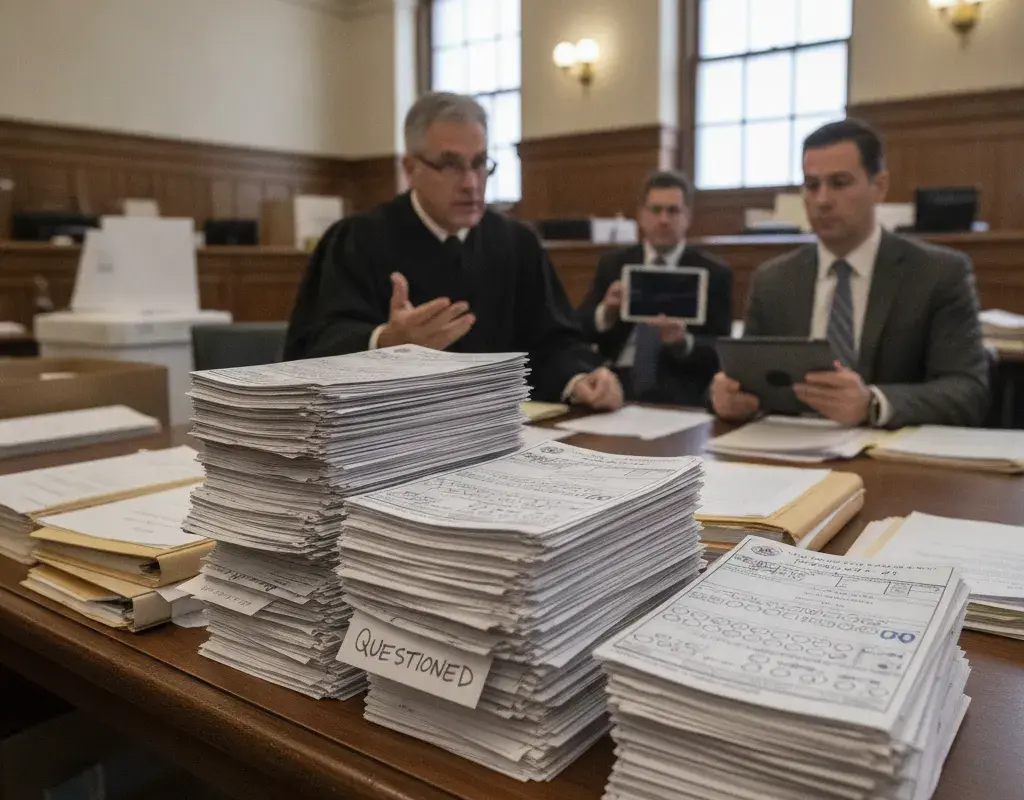
A federal judge in Los Angeles expressed significant doubt Tuesday regarding a Trump administration effort to stop California officials from counting roughly 20,000 ballots. The Justice Department argues that these specific voters may not be citizens, but U.S. District Judge David O. Carter questioned the methodology behind the government’s list and warned that such a move would constitute a monumental change to the state’s electoral process. While Carter declined to issue a final ruling until Wednesday, he took immediate action on one front, ordering federal authorities to stop threatening state and county election employees with criminal penalties.
During a lengthy hearing, Carter pressed federal prosecutors on the algorithms and systems used to identify the suspect voters, suggesting that if individuals have voted illegally, the government already possesses the power to indict them rather than blocking ballots en masse. This judicial skepticism follows a failed attempt by the Justice Department to bypass Carter entirely via a federal appeals court, which recently ruled that it lacked jurisdiction because the district judge had not yet issued his own decision.
First Assistant U.S. Attorney Bill Essayli argued that separating these ballots is a narrow request intended to protect the integrity of the election and prevent noncitizens from breaking federal law. He maintained that while the government’s data might not be perfect, it is reliable enough to justify segregating the votes until citizenship can be proven. Essayli dismissed claims that his office had bullied local officials and insisted that the federal government has attempted to maintain a collaborative tone throughout the dispute.
Lawyers representing California countered that the administration’s demands are illegal and rely on flawed data designed to disrupt an active election cycle. They pointed out that California allows voters to attest to their citizenship under penalty of perjury, a standard they argue aligns with congressional intent. State attorneys characterized the request as an attempt to sweep away established election frameworks and replace them with an opaque procedure dictated by federal agents, calling it a recipe for chaos within the democratic process.