
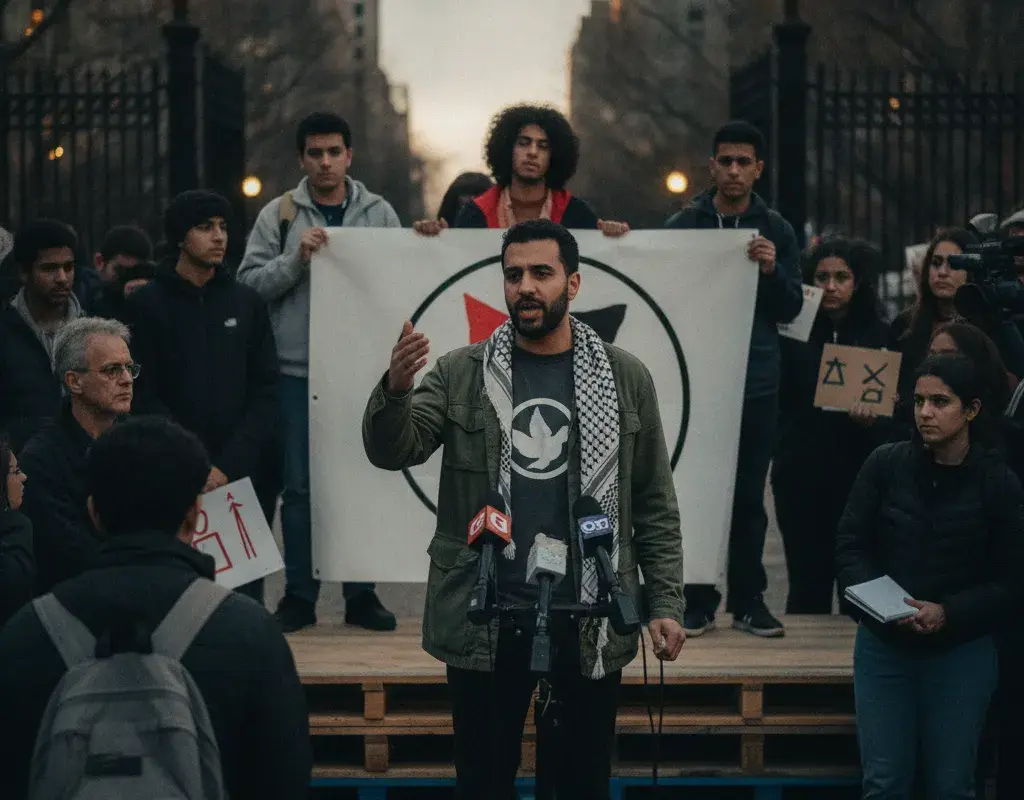
Mahmoud Khalil has become an unlikely symbol of a growing political fissure in the United States, emerging from the campus protests at Columbia University to challenge long standing narratives regarding Israel and Palestine. At 31, Khalil believes his activism has contributed to a fundamental shift in how the American public perceives Palestinians, viewing them increasingly as equals rather than distant figures in a foreign conflict. He argues that this change in consciousness is already manifesting in the ballot box, pointing to the rise of progressive candidates like Abdul El Sayed and Zohran Mamdani who openly criticize Israeli government policy.
The path to this influence was marked by significant personal trauma during the Trump administration’s crackdown on student dissent. A permanent resident born in a Syrian refugee camp, Khalil was detained for three months without criminal charges, missing the birth of his first child while held in a Louisiana jail. In his memoir, No Land to Stand On, he describes conditions involving constant fluorescent lighting and systemic cruelty that clashed violently with his image of America as a land of liberty and law. Despite these hardships, Khalil maintains that the attempt to silence him through intimidation actually validated the importance of his message.
While he continues to face deportation efforts from federal authorities, Khalil remains focused on the broader implications of his struggle for free speech. For him, the battle is no longer just about his own legal status or residency in New York, but about whether citizens can voice unpopular opinions without fear of state retribution. As he balances the role of a father to his eighteen month old son with his role as an activist, he insists that regardless of where he ends up living, his commitment to advocating for Palestinian rights will remain unchanged.