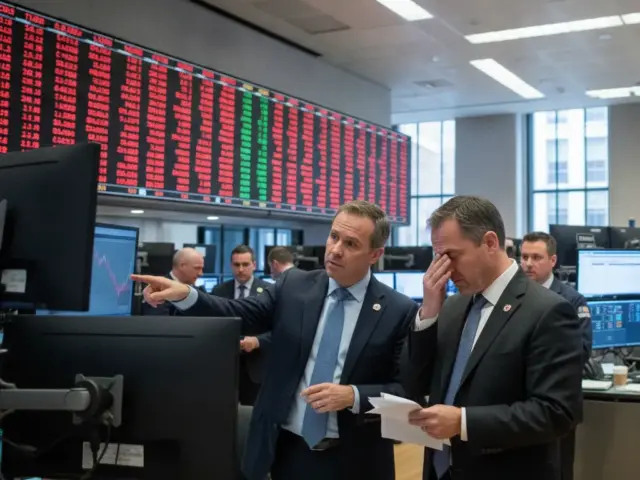

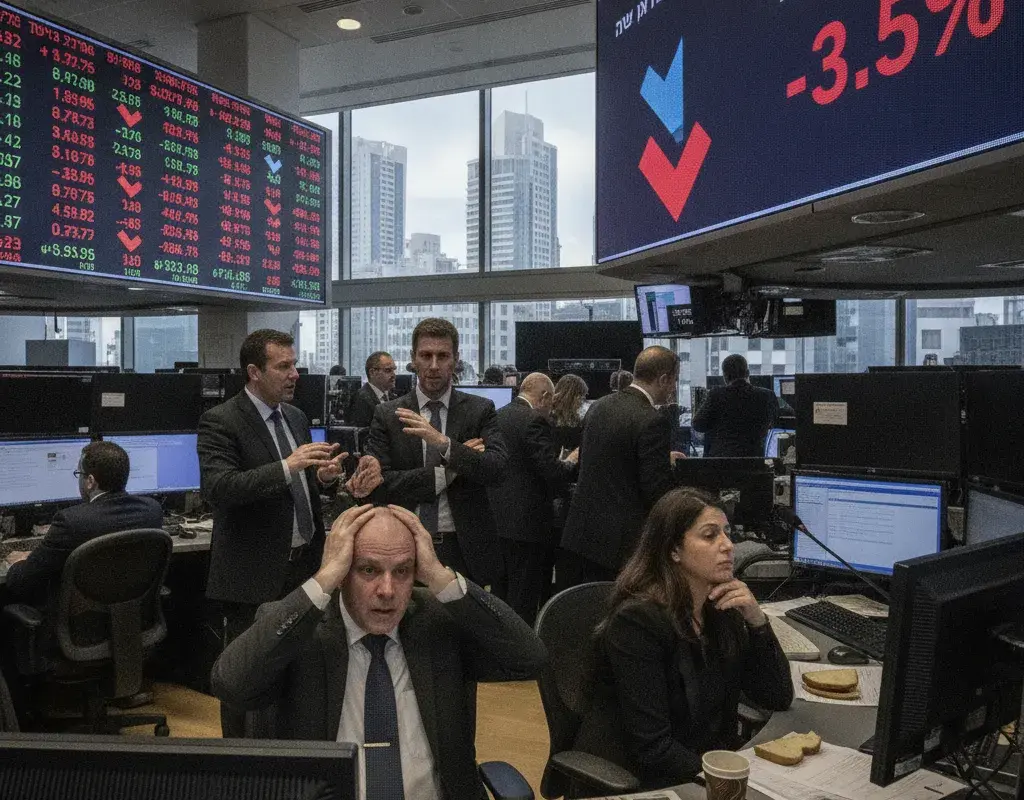
Investors reacted with immediate apprehension on Wednesday as early exit polls suggested a stalemate in Israel’s parliamentary elections. The benchmark Tel Aviv 125 index tumbled by as much as 3.5 percent in early trading, reflecting deep anxiety over who will lead the government following the nation’s first vote since the onset of the conflict in Gaza. This volatility underscores how sensitive markets remain to political instability during times of national crisis.
Current counts indicate that neither Prime Minister Benjamin Netanyahu’s right-wing alliance nor the opposition bloc led by Gadi Eisenkot is close to securing the sixty-one seats required for a majority in the Knesset. With roughly three quarters of the ballots processed, Netanyahu appears to be holding a slight edge with fifty four seats compared to forty seven for his rivals. However, without a clear mandate, the prospect of prolonged negotiations or another deadlock looms large over the capital.
This sudden dip occurs against a backdrop of surprising economic resilience. Despite operating on a war footing for several years, Israel’s economy has remained robust, driven largely by significant investments in its high tech corridor. Government data shows steady growth through 2025 and into 2026, while the Bank of Israel recently revised its annual growth forecasts upward due to increased productivity from companies operating abroad.
Looking ahead, central bank officials had predicted aggressive expansion reaching upwards of 7.5 percent by 2027, outstripping projections for other major global powers like the United States and Japan. While these long term fundamentals suggest strength, today’s sharp market correction proves that macroeconomic potential often takes a backseat when there is no clear path toward political stability.